Common Composition Mistakes in Street Photography and How to Fix Them
The street doesn't offer second chances. A man in a red coat steps off the kerb, a bus slides through the gap, two strangers exchange a glance — then the frame is empty again. Composition here isn't a set of rules applied after the fact. It's a run of fast physical decisions: where to stand, what to leave out, when to press.
The photographs that disappoint us later rarely fail for lack of a subject. They fail on a detail nobody checked: a bright patch at the top edge, a horizon two degrees off, a gesture caught half a second early. Below are the mistakes that turn up again and again in portfolios, with fixes you can practise on your next walk. None of them require new gear or a better camera — only a slightly more disciplined pair of eyes.
Mistake one: ignoring the edges of the frame
You see the face, the gesture, the coat — and the rest of the frame goes invisible. Then you get home and find a cropped elbow at the left border, a traffic cone growing out of someone's shoulder, a sliver of a stranger's head along the top. The subject is fine. The picture isn't.
The reason is partly physiological: in the moment, attention narrows to whatever you're excited about, and everything else is treated as background noise. The fix is to make the border an explicit part of composing rather than something you notice afterwards. Before you press, sweep the frame clockwise. It takes a second:
- Top edge: a sliver of sky, a sign or a half-head pulling the eye upward?
- Right edge: someone about to walk in, a pole, a doorframe cutting the frame awkwardly?
- Bottom edge: feet cropped at the ankle, or dead pavement you could remove by lifting the camera slightly?
- Left edge: an arm or a bag that reads as clutter rather than context?
Most edge problems have a one-second physical fix: half a step forward, the camera five centimetres higher, a sidestep so the lamp post lands behind your subject instead of beside them. Move your feet, not the zoom. A useful test is to look at the image as though it were a poster in a shop window — if your eye snags on something at the border that isn't the subject, that's the thing to remove.
Mistake two: no room for the subject to move
Placing the subject dead centre and letting the rest happen is a habit, and occasionally it works — a figure in a symmetrical doorway can be strong. More often the frame feels stuck: a man walking left with two-thirds of empty pavement trailing behind him gives the eye nowhere to go.
Decide which way the subject is moving, looking or leaning, then give them space in that direction. Walking left? Put them on the right. The gap becomes anticipation. A cyclist entering the frame from the left needs the open road in front of him, not behind; a woman looking up at a building wants air above her head, not below her feet.
Empty space isn't automatically good, either. Squint at the frame: if the gap reads as a shape that balances the subject, keep it. If it reads as an accident, move or crop. The trick is that the space should feel like it belongs to the subject — a runway rather than a hole.
Mistake three: the almost-level horizon
Shooting handheld and fast means the frame drifts. A horizon tilted by two degrees doesn't look daring; it looks like something nobody noticed. Verticals matter just as much — lamp posts and doorframes leaning slightly inward make a picture feel unstable for reasons viewers can't name. Look at a row of railings or a building's window columns and you'll see immediately whether your camera was square to the world.
Fix it mechanically, until it becomes a habit:
- Turn on the grid and the level indicator, and look at them while composing, not after.
- Align the frame's edge to a solid vertical — a post, a window, a wall — rather than trusting your sense of balance.
- If you shoot from the hip, practise holding the camera against your body so the back stays parallel to the buildings.
A strong diagonal can be wonderful, but if you tilt, commit; the halfway tilt is the enemy. And remember that straightening in editing crops the frame, so leave yourself room at the edges — the picture you carefully composed may lose a few percent of its border to the correction.
Mistake four: never changing your eye level
Most of us shoot standing up, from about 1.7 metres, which is why so many street photographs look alike. The fix costs nothing.
Crouch and a crowd becomes a forest of legs with one face in it. Stand on a step and a crossing turns into a pattern. Sit on a bench and you're at the level of a child, a dog, a suitcase. Shoot down at a queue from a staircase and the heads become a rhythm of shapes; shoot up at a stallholder from knee height and the frame gets drama for free.
There's a related habit worth stealing from landscape photographers: find the background first. A clean wall in good light, a shaft of sun between buildings, a striped shopfront. Compose the empty frame and wait for someone to walk into it. The background is the half of the composition you control completely — subjects are borrowed, but the wall is yours.
Mistake five: pressing the shutter a beat too soon
The most painful near-misses are timing errors. Frame right, light right, subject right — and the gesture incomplete. A hand still on its way to a face, a foot mid-fall, two people a hand's width apart instead of touching.
Anticipation improves with one small change: watch a subject for a couple of seconds before raising the camera. Ask yourself what is about to happen. The walker will reach the light, the man will lift the cup, the friends will meet. Pre-focus on the spot where the picture will occur, then wait.
Then hold on a moment longer than feels natural. Many photographers release the instant the subject enters the frame, which is often the awkward gap between two positions. One extra half-beat, or one extra frame, catches the gesture fully formed. Walk away without taking the obvious second shot and you will usually regret it.
Mistake six: leaving before you've worked the scene
The opposite error is leaving too early. You take one frame, feel self-conscious, and move on. But the first frame is rarely the best; the light shifts, someone else walks in, the subject turns.
When something catches your eye, stay put. Take the obvious picture, then take four more:
- Move a step left, then a step right.
- Drop to one knee.
- Wait for another passer-by to fill the empty side of the frame.
- Turn around and look at what's behind you.
Thirty seconds, and the cheapest improvement available to any photograph. Working a scene also gives you something less measurable: the second and third frames are usually less nervous than the first, and a relaxed frame reads as relaxed.
Mistake seven: a subject that doesn't separate from its background
This one survives every other check. The composition is balanced, the horizon is straight, the timing is right — and the photograph still feels flat, because the subject is the same tone or colour as whatever sits behind them. A man in a grey coat against grey shutters. A woman in a dark jacket swallowed by a dark doorway. A bright shirt against a bright van.
Separation comes from contrast of tone, colour or focus, and you can usually find it by moving a metre. Look for the dark patch behind a light face, the sunlit wall behind a silhouetted figure, the plain surface behind a busy shape. Squinting at the frame is the fastest test: if the subject disappears into the background when you blur your eyes, the camera will record the same confusion.
Busy backgrounds cause a related problem. A face ringed by signage, scaffolding and passing traffic has to compete for attention, and often loses. When a background is unavoidable, use a wide aperture or simply get closer, so the subject fills more of the frame and the clutter falls to the edges where it does least harm.
Mistake eight: practising only when a photograph is at stake
Composition habits are built in the quiet moments, not the good ones. Waiting for a bus, sitting in a café, standing in a queue — these are free opportunities to rehearse. Give yourself small drills and the checks become automatic when it matters:
- Ten frames, one corner: photograph only the top-left quadrant of your view for ten frames. It forces you to notice edges.
- One spot, five heights: don't move your feet for five minutes; change only your eye level.
- Background first: find three empty backgrounds and wait for a stranger to cross each one.
- Count the borders: say the four edges out loud before every press for a week. It feels ridiculous and it works.
Do this often enough and the five-second check stops being a checklist. It collapses into a single glance, the way a driver reads a road without reciting the rules.
A five-second check before you press
None of this needs to slow you down. With practice, the whole sequence compresses into a breath: edges clean, subject with room to move, verticals straight, eye level chosen rather than defaulted, gesture complete, background separating the subject from the crowd. Then press, and hold for one more frame.
The street will keep taking frames away from you. A good composition habit just means that when the moment arrives, you're ready for it — and that you come home with the picture you saw, rather than the one the edges ruined.
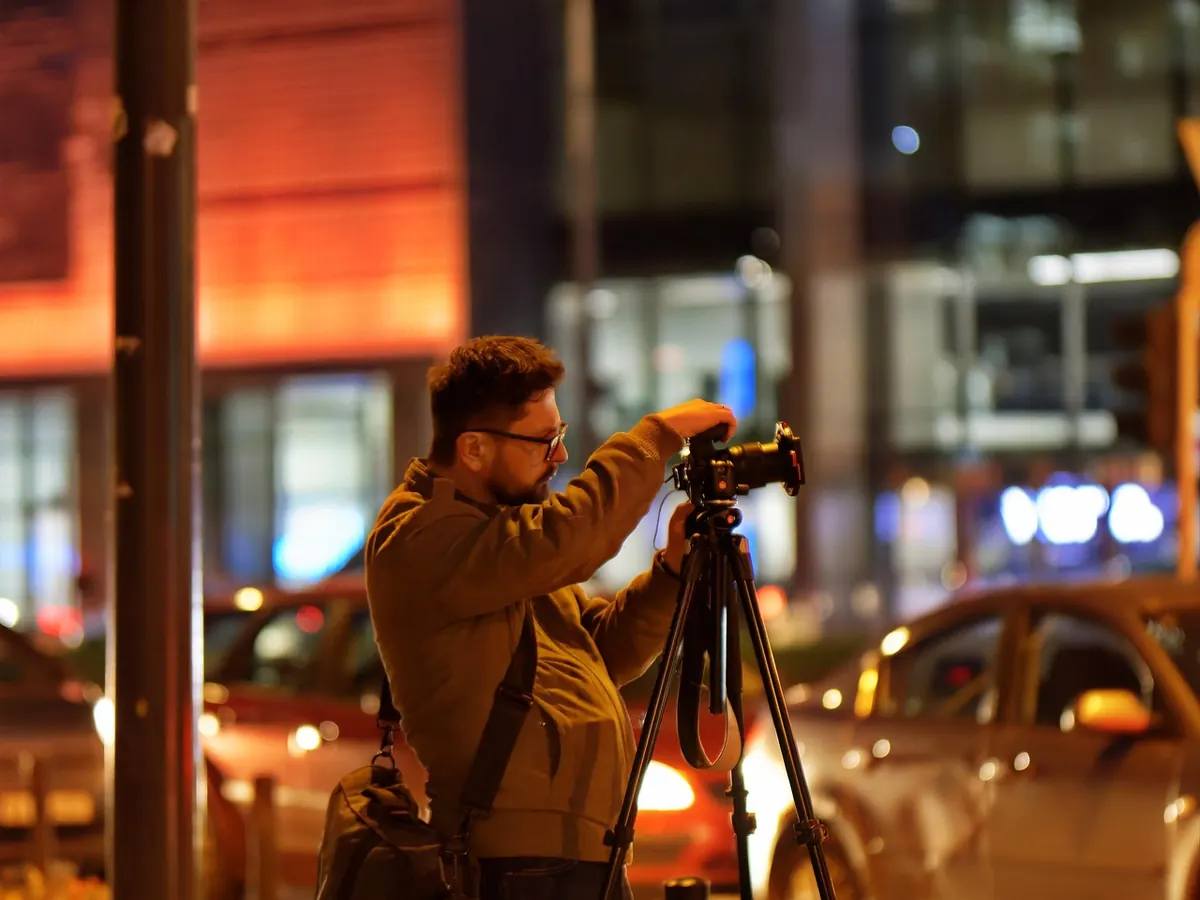
Photo: Surprising_Media / Pixabay
You Might Also Like
A practical look at when the phone in your pocket beats the camera in your bag for daily visual storytelling — and when it quietly falls short.
Street posters are the least curated layer of a city’s visual life — a record of who speaks, how loudly, in what typeface, and to whom.