Building a Photo Essay: A Step-by-Step Guide from Concept to Sequence
A single photograph can stop a stranger in their tracks. A photo essay has to do something harder: keep them walking. Ten strong pictures stacked at random read as a portfolio; the same ten arranged with intent read as a story. The difference is rarely talent and almost never luck. It is structure, decided partly before you shoot and finished at the editing table.
What follows is the full arc — finding an idea worth the effort, shooting with a narrative in mind, and shaping the raw material into a sequence a reader will follow from first frame to last.
Start with a question, not a theme
"The harbour" is a theme. "What happens to a working harbour when the fleet shrinks?" is a question. Themes generate pretty pictures. Questions generate photographs that need to be looked at twice.
Before you pick up a camera, write the idea in one plain sentence. If the sentence needs three commas and a semicolon, it is probably two essays. A workable sentence names a subject, implies a tension, and suggests where you would stand to photograph it.
Good questions usually come from something you already half-know: a route you walk every week, a trade your family used to be in, a building that changed use. Familiarity gets you access and gives you the patience to wait. Curiosity gives you a reason to look again after the first obvious frames are gone.
Make a one-page treatment
This is not bureaucracy; it is a way of noticing when the story on the ground differs from the one in your head. One page, written by hand, answered honestly:
- The question — one sentence, no jargon.
- The cast — who or what appears, and why these and not others.
- Six to eight scenes you expect to find, listed in loose order.
- Two frames you would be heartbroken to come home without.
- The failure condition — what would make this story collapse? No access, bad weather, a subject who withdraws.
Keep the page in your bag. Halfway through a shoot, when you are tired and shooting everything, it will tell you what you actually came for. Expect to rewrite it in the field; that revision is the story getting more accurate.
Shoot for coverage, not collection
On location the temptation is to chase beautiful single frames. Resist it just enough. An essay needs coverage: wide frames that tell us where we are, medium frames that show activity, close details that carry texture, and portraits that let us meet someone. Miss one of those layers and the edit will feel thin, no matter how good the best picture is.
Ask of every scene: what job does this do in the story? Establish place, introduce a person, mark a change in light or time, or provide contrast. If you cannot answer, shoot it anyway — but mark it as a question, not a chapter.
Three frames worth chasing in every scene
An establishing frame that gives the scene a geography. A working frame that shows the activity at its most characteristic. A detail frame — hands, tools, a worn edge — that carries the texture the wide shot cannot. Get those three and you have a building block rather than a lucky accident.
Habits that pay off later
- Shoot sequences, not singles. After a good frame, stay. The gesture after the gesture, the pause after the effort, is often the picture that sets the tone.
- Move your feet before you zoom. Changing distance changes meaning; changing focal length mostly changes framing.
- Protect the boring frames. Doorways, signs, hands, weather, the walk between two places. They are the connective tissue of the sequence.
- Record small facts. Names spelled correctly, times, a two-line note about what was said. Future-you, captioning at midnight, will be grateful.
The first sort: cut hard, then cut again
Coming home with six hundred files is normal. Working through them is the actual craft, and it takes longer than the shoot did.
First pass: reject anything broken — focus, exposure, an unhelpful expression. Second pass: group by scene rather than by quality, so you can see which scenes are covered and which are missing. Third pass: hunt for repetition. When two frames do the same job, keep the better one and let the other go. Be especially suspicious of your favourites; affection for the effort behind a picture is not the same as the picture being necessary.
If two frames do the same job, one of them is decoration.
A useful test: view the candidates as small thumbnails, all on one screen. If the story still reads at that size, the sequencing is doing real work. If it only reads when each image is full-screen, the meaning is sitting inside individual pictures instead of between them.
Sequence: rhythm, contrast, and one good turn
Sequencing is editing in the musical sense. Place a wide frame after a close one and the wide feels like exhaling. Put two faces together and the reader starts comparing them. Put a face beside the thing that face is looking at and you have made a sentence without a word.
A few principles that hold up across subjects. The first frame's job is to make the second frame necessary — open with orientation rather than with your flashiest picture. Vary density: two or three calm frames, then something crowded or close. Let paired images change each other's meaning rather than repeat it. And build in a turn somewhere past the middle: a shift in light, scale, or subject that acknowledges the story has moved.
End on resonance, not summary. A departure, an empty room, a gesture left unfinished. The last frame should leave a door slightly open. Then test the whole thing by removal — pull out any single image and see whether the essay reads the same. If it does, it was never load-bearing.
Captions and the space between pictures
Give every image a minimum caption: who, where, when. Add a second sentence only when it says something the photograph cannot — a name, a consequence, what happened the following week. A caption that describes what we can already see steals attention from the picture. A short introductory text of forty to sixty words, placed before the first image, is usually enough to set the terms; anything longer starts competing with the photographs.
A small workflow you can repeat this month
- Write your question in one sentence and read it aloud. If it sounds vague, sharpen it before you go anywhere.
- Fill in the one-page treatment, including the failure condition.
- Shoot one scene properly — establishing, working, detail — rather than five scenes badly.
- Same evening, make a rough selection of no more than twenty frames while your notes are still fresh.
- Sleep on it. The next day, cut to twelve, then to eight. The cuts get easier and more honest.
- Lay the sequence out on a table or a single screen and read it left to right, out loud, as if explaining it to someone.
Then show it to one person who will tell you the truth. Not whether they like the pictures — ask them where they got bored, and where they wanted to know more. Fix those two places and you have an essay.
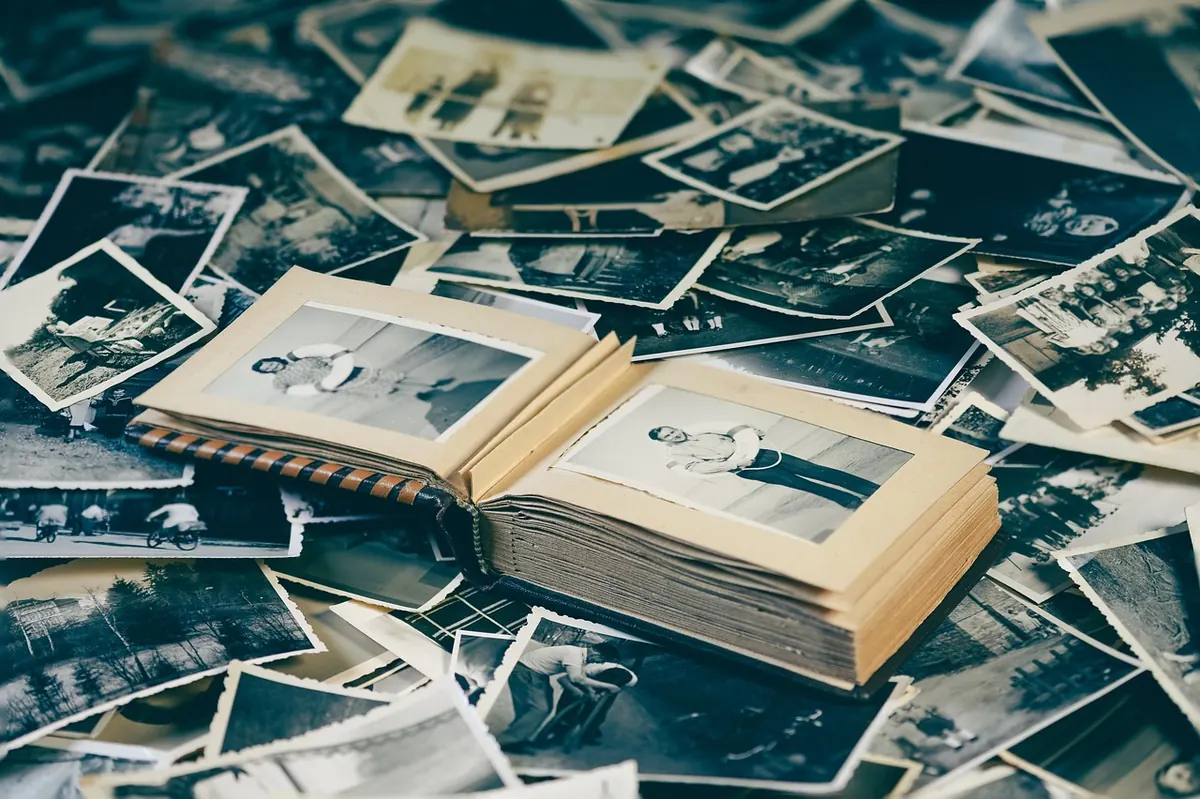
Photo: martinvorel_com / Pixabay
You Might Also Like
A practical look at when the phone in your pocket beats the camera in your bag for daily visual storytelling — and when it quietly falls short.
Street posters are the least curated layer of a city’s visual life — a record of who speaks, how loudly, in what typeface, and to whom.