Why Every Image Is a Point of View: An Explainer on Visual Bias
Two photographers stand at the same corner of the same square on the same afternoon. One comes back with a picture of a crowd pressing forward, dense as a wall. The other, from four steps away, comes back with an almost empty pavement and a single banner held by two people. Nobody has retouched either file. Both are accurate. They are simply answering different questions.
That gap between "accurate" and "complete" is where visual bias lives. It is rarely a matter of fakery. It is a matter of decisions — dozens of them, made quickly, often by instinct, sometimes by necessity. Learning to spot those decisions is not about becoming suspicious of every photograph. It is about reading them the way you read a sentence: aware that someone chose the words.
The Frame Is an Argument About What Matters
Every photograph begins with a subtraction. Before light, color, or contrast enters the conversation, something has already been left out: the left third of the street, the friend behind the subject's shoulder, the shuttered shop that explains why the pavement is empty.
The edge of the frame is the most opinionated line in the picture, because it decides where one story stops and another begins. A wide view of a market stall says abundance. Step two meters closer so the frame holds only the empty crates and the flattened cardboard, and the same morning says scarcity. Nothing about the morning changed except the boundary drawn around it.
Read the edges before you read the subject
Your eye wants to go to the face, the brightest patch, the sharpest point. Force it outward instead. What is sliced in half at the border? Whose arm is entering from the right with no body attached? Where does a strong line — a curb, a railing, a shadow — run out of the picture? Cut-off bodies and amputated objects are fingerprints. They show you exactly where the photographer drew the line, and what they were willing to sacrifice to keep it there.
Cropping Is Rewriting
Ten percent can change the subject of the sentence. Imagine a photograph of a man laughing in a group outside a courthouse. Crop out the person beside him, the one who has just told the joke, and the laugh turns into a smirk, then a jeer. The expression never moved. The context was doing all the work, and the crop took the context away.
This is why tight vertical crops feel so declarative: they isolate a subject and turn them into a symbol. Horizontal crops tend to keep relationships intact — person to person, person to place — and so they read as narrative rather than verdict. Aspect ratio is not a technical detail. It is tone of voice.
So when you meet a tightly cropped image, ask a simple question: what would the photographer have had to remove to get here? Sometimes the answer is a distracting traffic cone. Sometimes it is the reason the person was standing there at all.
Timing Chooses Which Sentence You Read
A photograph is one frame pulled from a continuous stream, and the shutter is a pair of scissors. The same gesture reads completely differently depending on where you cut: a hand raised to wave, held a beat too long, becomes a hand raised in anger. A face caught mid-blink looks shifty. A yawn during a ceremony looks like a shout.
Photographers know this, which is why so much of the craft is waiting. And why so much of the editing happens afterward, in front of a screen, choosing frame fourteen out of forty. That selection is invisible in the final image but it is as consequential as anything done in a darkroom. The photographer who waits for the moment of contact, the embrace, the collision, is making a claim about what the event essentially was.
There is a gentler version too: the deliberate coincidence. Standing where a passerby's head will line up with a billboard's painted face, then pressing the shutter at the exact half-second when they do. The result is funny, or pointed, or cruel — and it existed for a fraction of a second, because someone arranged to be there for it.
Lens, Height, and Light Turn the Volume Up
Equipment is not neutral either. A long lens compresses distance, stacking a crowd that is fifty meters deep into a solid slab pressed against a building. A wide lens used up close inflates whatever is nearest and pushes the rest away, which can make a modest room look cavernous or a small gathering look like a mob.
Height works the same way. Shooting up at a speaker puts them on a plinth. Shooting down at a crowd flattens people into texture, into a pattern of heads and shoulders. From above, a queue looks like a system; from eye level, it looks like a line of tired people. Neither angle is dishonest. Both are grammatical choices, and grammar carries meaning.
Light closes the argument. Hard midday sun carves shadows under eyes and makes faces look worn. Flat overcast light is forgiving and slightly anonymous. On-camera flash at night isolates a subject against black, which reads as drama, or as guilt, depending on what you already expect. Backlight turns a person into a silhouette and hands the picture to the sky.
Editing Is a Series of Small Votes
None of these adjustments is automatically a manipulation. Most are ordinary craft. But each one votes for an interpretation, and votes add up:
- Exposure and contrast. Slightly brighter reads as optimistic and open; heavier contrast reads as grit and confrontation.
- Color temperature. Warm tones feel nostalgic and domestic; cool tones feel clinical and distant. Even accepting an automatic white balance is a decision.
- Dodging and burning. Lightening one area and darkening another steers the eye. A darkened corner can erase a detail you would otherwise have noticed.
- Clarity and smoothing. Texture pushed up makes streets look grittier; skin smoothed down makes a person look younger, healthier, or less real.
- Removal tools. A bin, a cable, a passerby. Clearing sensor dust is housekeeping; deleting a person from a public scene changes the record.
- Sequence and caption. An image inherits meaning from its neighbors in a grid, and a caption like "scuffles continue" does work the picture alone cannot.
The last item deserves its own moment. Photographs almost never travel alone — they arrive in a layout, a feed, a group of six. A quiet portrait placed after three images of damage reads as a perpetrator. The same portrait placed first reads as a witness.
Bias Does Not Require Bad Faith
Most visual slant arrives quietly, through access and deadline and habit. A photographer with eight minutes gets the picture that exists in eight minutes. An editor with one slot picks the frame that reads fastest at thumbnail size. A newsroom with a photographer stuck behind a barrier shows you the story from behind the barrier, for months.
And viewers finish the job. We fill the space outside the frame with what we already believe. If you expect a crowd to be hostile, a raised arm confirms it; if you expect celebration, the same arm is a cheer. The picture supplies the shape, and we supply the meaning — which is why a good crop plus a willing audience is such an efficient combination.
Reading an Image in a Minute
You do not need to become a cynic to do this well. A photograph is not a lie for being partial; it is a record of a decision. Here is a quick routine to run the next time an image stops you:
- Look at the whole frame, corners first. Name two things that are cut off.
- Find the brightest area and the sharpest area. That is where you were sent.
- Ask what sits just outside the edges. If you had been standing there, what would you have seen?
- Identify the light source. Sun, flash, window, phone screen — what does it flatter, and what does it hide?
- Consider the moment. What happened a half-second before, and a half-second after?
- Check the words and the neighbors, if there are any. Captions and sequences are part of the picture.
- State what the image wants you to conclude. Then ask whether the image alone supports it.
Do that a few dozen times and it stops being a checklist. You start noticing the edge of a photograph the way you notice a comma — quickly, automatically, and with a clear sense of what it changed. That is the whole skill: not refusing to be moved by an image, but knowing precisely who moved you, and how.
Photo: Beyzanur K. / Pexels
You Might Also Like
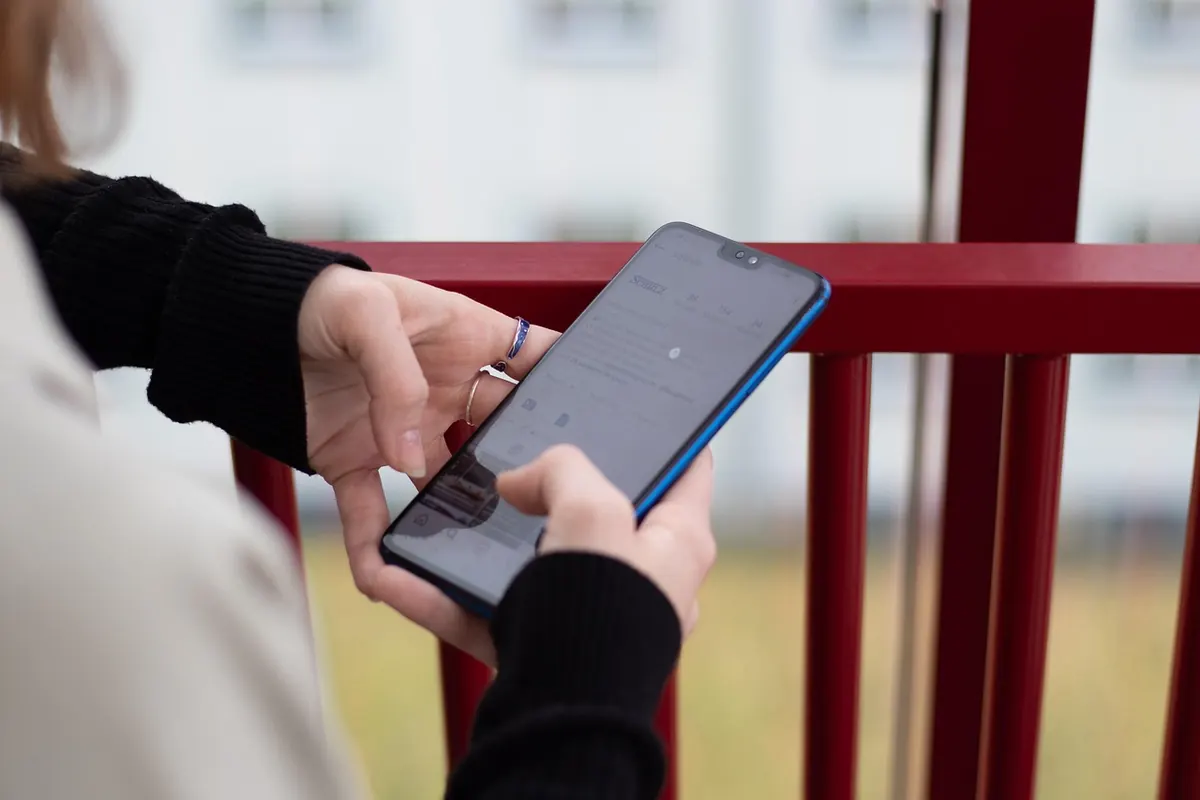
A practical look at when the phone in your pocket beats the camera in your bag for daily visual storytelling — and when it quietly falls short.
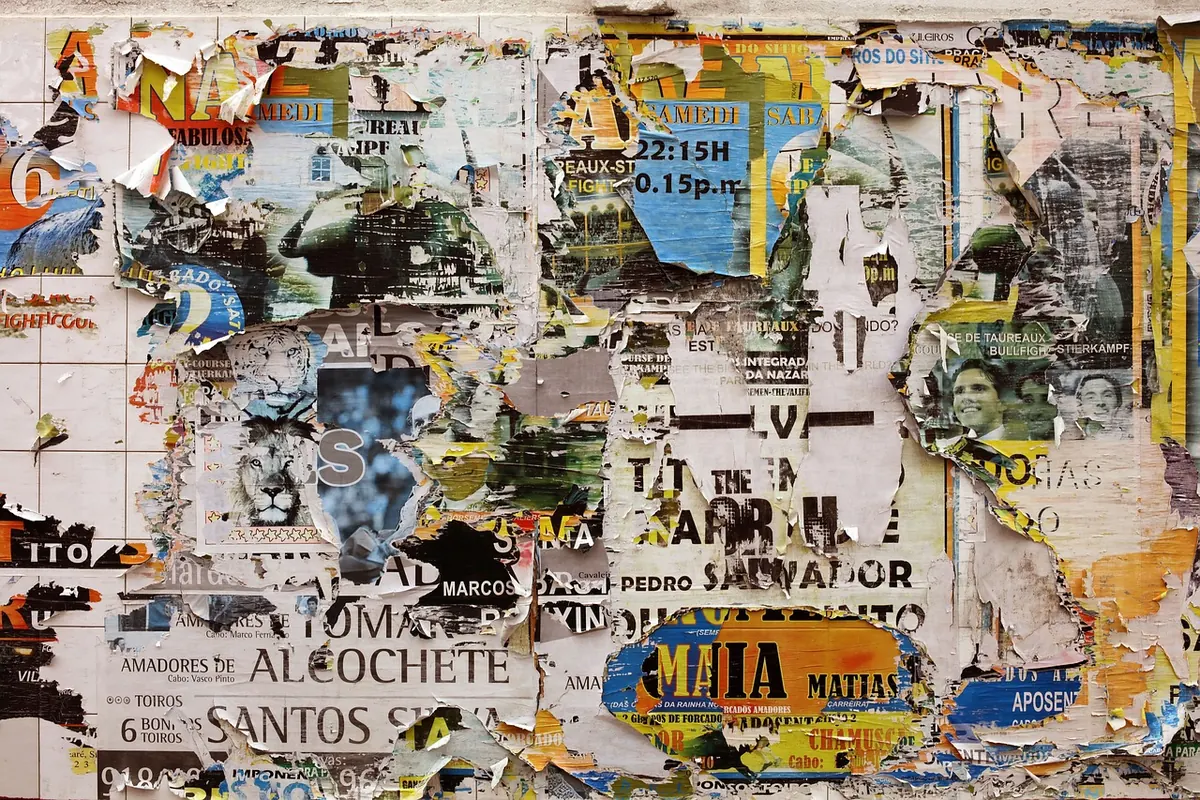
Street posters are the least curated layer of a city’s visual life — a record of who speaks, how loudly, in what typeface, and to whom.